
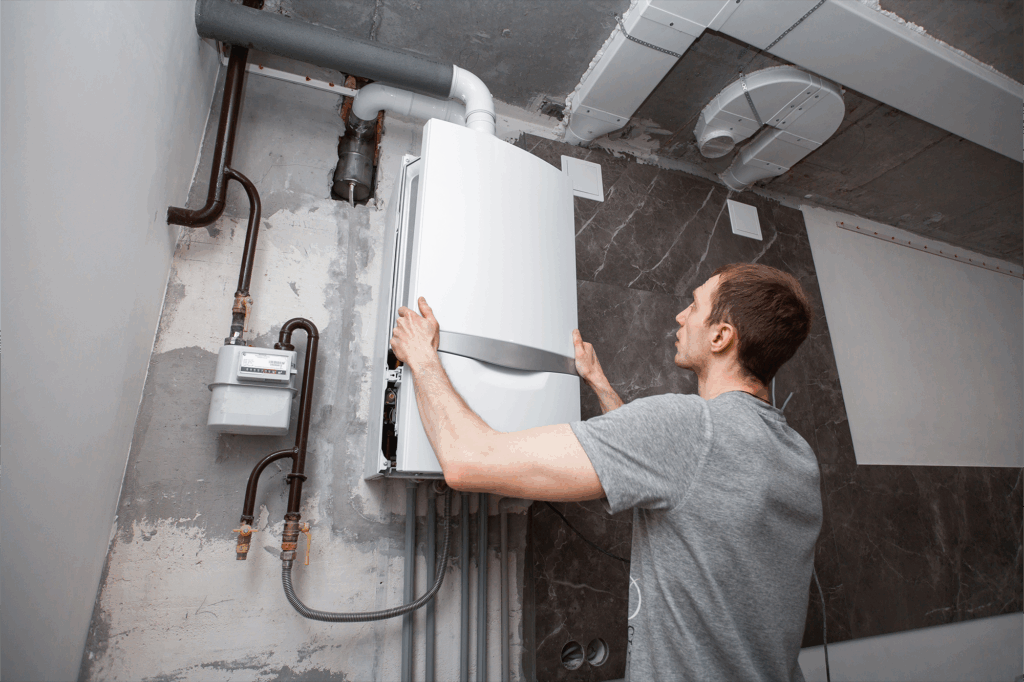
Boilers are your best friend when they’re working, but when something goes wrong, they can disrupt your routine. Imagine taking a nice hot shower and then – bam – the water goes cold, or it’s the middle of winter and you need a pile of blankets to keep you warm. In both scenarios, suddenly it’s the boiler repairman who’s your best friend.
But how do you know if repairs make more sense than investing in a new boiler? To make that decision, you should consider several factors.
Signs of Boiler Issues
Some boiler issues make themselves known immediately, like the shower scenario, but other signs are more subtle. You should know the warning signs that your boiler needs attention.
These include:
- Irregular heating or lack of heat
- Not enough hot water
- Strange noises coming from the unit
- Leaks
- Water pressure issues
- Higher energy bills
- An aging system
- Frozen or burst pipes
- Malfunctioning thermostat
- Damaged pump or pump seal
- Buildup of limescale or sediment
Note that boiler repairs are not a DIY project. Attempting repairs without proper training can lead to further damage, safety risks, or system failure. Having a qualified professional handle repairs ensures that issues are accurately diagnosed and resolved in compliance with safety standards.
Factors to Consider When Deciding on Repair Vs. Replacement
Several factors should come into play when deciding on repair vs. replacement.
- Cost of Repair Vs. Replacement
The standard rule of thumb is that if the repair is going to cost 50% or more of the cost of replacement, replacement is the more prudent option. However, if you are having to make smaller, more frequent repairs, those may be adding up enough that replacement makes sense.
2. Age of Unit
Boilers tend to last about 15 to 20 years, so if yours is in that range or older, you’re going to have to face the music and replace the unit sooner rather than later. Instead of paying for repairs, it may make more sense to make the investment in a new model.
3. Energy Efficiency
A properly functioning boiler is critical to maintaining energy efficiency, especially in New York’s demanding climate. Keeping systems in top working order helps protect your comfort, your boiler’s performance, and your wallet.
If your boiler is on the older side, it may make sense to upgrade to a newer, more energy efficient model. The money that you save on your utility bills will make it a worthwhile investment in the long run.
4. Warranties
If you have a warranty on your boiler, or a home warranty, check the terms regarding boiler replacement. If your warranty covers replacement, it’s a no brainer.
5. Your Plans for Your Home
If you’re planning to sell your home in the near future, a new, energy efficient boiler will be a great selling point. Buyers typically don’t want to have to make an investment like that when they just shelled out money on a new home.
6. Advice from Professionals
A licensed professional can perform diagnostics to determine whether repair or replacement is the safest and most efficient option. When you call a plumber about your boiler needs, be sure to ask them these questions.
- Are your technicians licensed professionals?
- What diagnostics will you perform to determine repair vs. replacement?
- How do you ensure all work complies with safety standards?
- Do you provide installation, repair, and preventive maintenance?
- How do you handle both urgent malfunctions and routine service?
Indicators That You Need a New Boiler
Sometimes, unfortunately, the decision is easy and you need to bite the bullet and invest in a new boiler. Indicators that it’s time for replacement include:
- Age: Again, if your boiler is more than 15 to 20 years old, replacement is on the horizon anyway, so it probably makes sense to make the investment now.
- Fluctuating Water Temperatures: If you start finding yourself in the shower with hot water one minute and cold water the next, it’s likely a sign that your boiler is failing.
- Leaks: Leaks can sometimes be an easy fix, but if the leak is coming from a crack or corrosion, you’ll need a replacement.
- Visible Damage: If you see rust or cracks on the outside of the unit, you’re going to start running into issues that can’t be fixed.
- Yellow Flame: The pilot light flame should be blue, so if yours is yellow, you’ve got a carbon monoxide risk and need to call a professional immediately. The yellow flame means that the gas is not combusting properly.
- High Energy Bills: If your boiler is getting near its end, it will start to lose efficiency, which you’ll see in your energy bills.
Maintaining Your Boiler
As the saying goes, an ounce of prevention is worth a pound of cure. To get the most life out of your boiler, you need to give it TLC. Getting an annual inspection and service can help you to avoid frustrating issues and keep your boiler functioning longer.
An annual inspection and service will include:
- An inspection of all the boilers components to look for leaks, corrosion, or other signs of issues
- An inspection of the pipes to check for leaks and make sure that the unit is safe.
- Cleaning of the heat exchanger and combustion chamber
- Filter replacement
- A check of all safety devices
- Combustion analysis to check for carbon monoxide leaks
- A test of the gas pressure
- Flame setting adjustments
- An inspection of the condensate disposal system and trap
- A check of the water levels and system pressure
In Closing
Boilers can develop problems that can leave you in the cold. When this happens, you’ll want to make the right decision about repair vs. replacement. The Licensed Master Plumbers at New York Plumbing Pros are ready and willing to evaluate your boiler and provide you with guidance so that you can choose the best option for you and your family. Give us a call today to learn more. Your home’s comfort and safety are our priority.